
Dr. Cornelius Weber
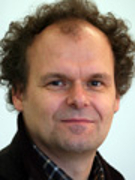
Photo: UHH/Knowledge Technology
Lab Manager
Knowledge Technology
Address
Office
Contact
Research
My work is committed to describe the structure of the brain in a simple way. Since the brain is complex it is better described by the mechanisms that shape it. Intrinsic mechanisms are specified by the genetic code, or by the programmer. Activity-driven learning mechanisms are the contribution of the environment.
The brain is best understood by an integrative view of the many different coding and learning strategies in its diverse structures. While computational neuroscience is often highly specialised and intelligent robotics AI-oriented, the field in between offers an opportunity to combine and validate models of neuroscience.
At the FIAS in Frankfurt, I have participated in the proposals of the projects Bernstein Focus: Neurotechnology Frankfurt and IM-CLeVeR. Since in Hamburg, projects are RobotDoC, KSERA, CML, and more.
CV
| 2006-2010 | Junior Fellow, Frankfurt Institute for Advanced Studies, Frankfurt |
| 2002-2005 | Research Scientist, Hybrid Intelligent Systems, University of Sunderland, UK |
| 2000-2001 | Postdoc, Brain and Cognitive Science, University of Rochester, NY |
| 1995-2000 | Teaching Assistant and acquisition of PhD, NI group, Technische Universität Berlin |
| 1989-1995 | Study of Physics, Diploma, Faculty of Physics, techfak, University of Bielefeld |
| 1987 | Abitur, Max-Planck-Gymnasium Bielefeld |

Publications
Web
Best books. Linear Algebra, Neural Computation, Python, teaching, ICANN 2014
Labs: Rolls/Stringer Hinton Grossberg Olshausen Rao Zhang Billard Toussaint Oudeyer
Local: HCNS Lectures & Events Cognitive Neuroscience Seminar
Search: ixquick, hulbee, qwant, metager, google, yahoo, ask, yandex, duckduckgo, deepdyve, yippy, kartoo, yacy, wolframalpha
Infotain: golem.de, BBC, guardian, SPIEGEL, sz, MOPO, digg, delicious, JoVE, TED EXPO21XX
Initiatives: open source, BUND, ADFC, FUSS, AI
My aquarium: father-, mother-, baby- white cloud mountain minnows


