

> Steeleye Span > Records > Below the Salt
Steeleye Span: Below the Salt
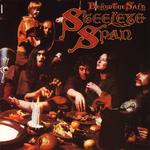 |
Below the Salt Chrysalis CHR 1008 (LP, g/f sleeve, UK, September 1972) |
||
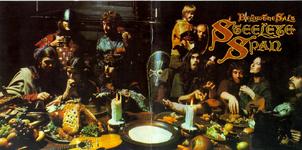 |
BGO Records BGOCD 324 (CD, AAD, UK, January 1997) |
||
 |
Chrysalis Promo Box Set October 1972, 8 page booklet, leatherette box set containing: |
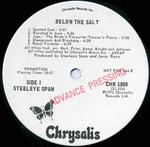 |
|
Produced by Steeleye Span and Jerry Boys;
Recorded by Jerry Boys at Sound Techniques, Chelsea, London;
Art direction and design by Grahame Berney;
Notes by Tim Hart
Thanks to The English Folk Dance and Song Society, Charlie (WEM) Watkins, Sound City, Dave Bland, Rev. and Mrs. Hart, not forgetting, of course, John Bowlin, and Oliver Wade.
Musicians
Maddy Prior: vocals [1-2, 4-9],
morrisette [1],
tambourine [6];
Tim Hart: vocals [1-2, 5, 7-9],
guitar [4, 6],
acoustic guitar [9],
dulcimer [5],
tabor [1],
spoons [3];
Bob Johnson: vocals [2, 6-7],
guitar [1, 3-6, 9],
acoustic guitar [8];
Peter Knight: violin [3-6, 8],
viola [5-6],
mandolin [1, 3],
tenor banjo [3],
piano [9],
vocals [2, 5-8];
Rick Kemp: bass [1, 3-6, 8-9],
drum [4],
vocals [2, 6-7]
Tracks
Side 1
- Spotted Cow
(Roud 956)
(3.06)
collected from the singing of Harry Cox of Norfolk - Rosebud in June
(Roud 812)
(3.42)
from the Journal of the Folk Song Society, collected from William King by Cecil Sharp in Somerset, 1904 - Jigs: The Bride’s Favourite / Tansey’s Fancy (3.10)
- Sheep-Crook and Black Dog
(Roud 948; Henry H30a)
(4.44)
collected by Ewan MacColl from Queen Caroline Hughes, a gypsy living in Dorset - Royal Forester
(Roud 67; Child 110; G/D 7:1465)
(4.34)
from the singing of John Strachan
Side 2
- King Henry
(Roud 3967; Child 32)
(7.10)
from The English and Scottish Popular Ballads, edited by Francis James Child - Gaudete
(2.25)
from Piae Cantiones (Finland, 1582) - John Barleycorn
(Roud 164; G/D 3:559)
(4.48)
collected by Fred Hamer from William Bartle in Bedfordshire, dedicated to Margaret Hamer - Saucy Sailor
(Roud 531; Laws K38; G/D 1:49)
(5.48)
from the Journal of the Folk Song Society, collected by George Butterworth in Sussex, 1907
Sleeve Notes
Below the salt—this, as its most vivid, can be found in the use of salt at the medieval food table. Here salt (an expensive and rare commodity of the time) was placed at the centre of the table. Above the salt sat the family and intimates of the household, below the salt sat the servants and dependants. Usually this.
Comment
Recorded at Sound Techniques, Chelsea, London May and June ’72. Production by Steeleye Span “because after the split with Sandy Roberton we didn’t know anyone else up to it.” The songs were largely chosen by Maddy and Tim, with Pete adding the jigs. Bob Johnson provided the tune for King Henry, and suggested the band should include Gaudete, later a massive Christmas hit. On the album it was faded in and out almost apologetically. The original idea, says Tim, was to “give the impression of a group of monks walking through cloisters, singing.” The album also included the haunting Sheep-Crook and Black Dog, the stage favourite Spotted Cow (later to be dressed up in a reggae version), and Saucy Sailor, still included in the band’s set.
Tim Hart, Robin Denselow: The Complete Steeleye Span, 1978
Review
Aus dem großen Plattenangebot der britischen Folk- und Folk-Rock-Szene zum Ende des letzten Jahres sei hier – last but not least – die vierte LP von Steeleye Span besprochen. Die Gruppe hatte zuletzt Anfang ’72 von sich reden gemacht, als sie – nach einem kometenhaften Aufstieg zu einer der populärsten Folk-Formationen in England – auf einem Höhepunkt ihrer Karriere mit Ashley “Tyger” Hutchings und Martin Carthy (heute heißen beide Albion Country Band) gleich zwei bedeutende Musikerpersönlichkeiten verlor. Nach der Neubesetzung durch Rick Kemp (Bass) und Bob Johnson (Gitarre) wurde allgemein eine Wandlung des electric folk-Konzepts und eine stärkere Hinwendung zum Rock hin erwartet – doch plötzlich ließ die Gruppe nichts mehr von sich hören und trat erst wieder auf dem großen Festival im Spätsommer mit einem neuen Repertoire und dann im November mit ihrem neuen Album an die Öffentlichkeit.
Below the Salt zu loben, scheint mit überflüssig – auch in deutschen Folkkreisen hat es sich inzwischen längst herumgesprochen, dass es kaum eine Gruppe gibt, die in ihren Bearbeitungen traditioneller Musik Authentizität, Kreativität und Sinn für zeitgemäße Darbietungsformen in einem solchen Maße verbindet wie Steeleye Span.
Ich möchte hier vielmehr anhand der LP auf einige Tendenzen aufmerksam machen, die mir für die Entwicklung der Gruppe charakteristisch erscheinen. Zunächst: Der vielleicht erwartete stilistische Wandel ist ausgeblieben. Zwar bringen die beiden neuen Gruppenmitglieder, besonders Rick Kemp durch sein gewaltig marschierendes Bassspiel (z.B. in King Henry), neue Anregungen in die Gruppe – im Ganzen aber führt Below the Salt die Tradition der früheren Veröffentlichungen fort (vgl. Spotted Cow, Jigs etc.) Dabei ist jedoch zu beachten, dass Tim Hart und Maddy Prior, nach dem Weggang von Hutchings und Carthy zweifellos der Kern der Gruppe, mehr und mehr in den Vordergrund rücken. Am deutlichsten greifbar ist diese Tenzdenz in der Version des John Barleycorn, die (mit einer Begleitung, die Peter Knight, Rick Kemp und Bob Johnson fast ganz in den Hintergrund rückt) fast von einem der Soloalben von Tim Hart und Maddy Prior stammen könnte. Als Gegenpol zu der etwas freieren Spielweise der Band in King Henry) und einigen anderen Stücken lässt sich eine Wendung von der romantisch eingefärbten Spielart des Folk zur strengeren Form des mittelalterlichen Gesangs verfolgen.
Diese Tendenz kommt klar zum Ausdruck in Gaudete, einem religiösen Lied aus der Sammlung der Piae Cantiones von 1582, und der Strenge der Kirchentonarten von Rosebud in June und Sheep-Crook and Black Dog. Dass diese Rückwendung zu den frühen Formen des Folk nichts Beiläufiges ist, sondern die Entwicklung der Gruppe ganz entscheidend betrifft, verbürgen Titel und Cover dieser LP, die sich ebenfalls auf einen mittelalterlichen Brauch beziehen: Die Sitzordnung am Esstisch wurde nach dem Salz (damals ein sehr kostbares Gewürz) ausgerichtet, das seinen Platz in der Mitte der Tafel fand; "Below the Salt" saßen gewöhnlich nur die Diener und Knechte.
Rolf, Sounds, 1973